Showing posts with label My Writing. Show all posts

Sunday, December 18, 2016

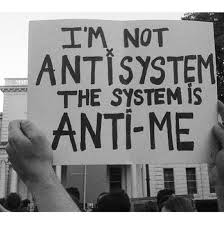
How to Fight the System

They will tell you that it is your fault and your responsibility.

You conceived and gave birth to your children. You should not have brought them into the world if you could not take care of them.

If you adopted then it may not be your fault but it was still your choice.

You are responsible and no one else.

They leave you with these words while you go home and try to live in a world of crazy instability.


In graduate school we read a research article and said the household with schizophrenic children were more stressful and negative. It went on to imply that this is obviously why these children develop schizophrenia.

This was before my daughter's own scitzoaffective diagnosis. Yet I understood the fatal flaw in their logic. How can you live with crazy day after day and not loose your own mind?

This year I was called out for being a helicopter parent. Then I received an email from the same school administrator telling me that if I was more involved in my daughter's life then my daughter would not be having any problems.

This is my daughter with asperger's. Although asperger's doesn't exist anymore. So she is autistic. Except she cannot be autistic because she is verbal (when she wants to be) and has an IQ of 130 and doesn't belong in the class of other children with behavioral problems.

When I saw my daughter at school she was curled up in a fetal position completely mute. They told me nothing was wrong. When I left the school she screamed that she wanted to come with me. Then she was just putting on a show because I had been there and we were talking about her placement.

At therapy I tell my daughter's therapist, the one with scitzoaffective, that I am not sure how I am suppose to do this anymore. She is 14 and no one else will be alone with her anymore. I tell her therapist I can't do it anymore either but I have to. She tells me I am mom. Yes I am mom but I am also done. There is no solution. There is no help for people her age. I am told to just keep doing what I am doing. Then I go home and my daughter has another fit and I get another bruise.

My son just turned 16. The one with asperger's and ADHD. He had asperger's long before it was no longer real. He is quick to tell everyone that he is now old enough to have a drivers license. He will not get one. I told him he needed to ride a bike first. He won't learn to ride a bike because he is scared. Just the thought that he is old enough to drive is enough to make him an adult in his eyes.

He told me today that he was grown and he can do whatever he wants. He hasn't done his chores in three weeks. He wants to buy a fish tank that is over 25 gallons. He can't even keep his room from being a toxic waste site. I tell him no and he tells me that he is an adult. I tell him that is great at 16 he is old enough to get a job and start paying his own way. I tell him we can sit down and work out his expenses together. He screams at me for another two hours about how he is so big and should get his way. Sometimes he slams his fist into the wall. Sometimes he slams doors. Sometimes he kicks things. At least today it isn't me.

He is failing school. Yet his special education teachers tell me they know and have been working with his teachers. His teachers are using him to tutor other teachers. For months I have been working with him to turn in assignments. I'm working on it. I'm working on it. I'm working on it. And he is still failing out of high school. Yet he is grown and can do whatever he wants.

They want me to resign his IEP to give him a computer to help with his schoolwork. He desperately needs a computer because no one can read his handwriting. He desperately needs a computer because he can not keep track of any paper assignment. He desperately needs a computer so that he may not be failing school. Yet I had to take away his computer from home because he sneaks it into his bedroom and hacks off the parent control software so he can watch porn and people killing each other. He tells me that parental control software is not the solution because he is grown now and can do whatever he wants.

I won't sign the IEP because it says that my son is doing well in school. They tell me that it is from his last renewal and that they will change it when it is time to reevaluate him. I tell them that my daughter is stuck in a classroom with kids who have taught her about porn and cutting and a teacher who doesn't think hell is a cuss word because the district read the line "she seems to be adjusting to middle school well" which was written two weeks after she started middle school. They didn't change it and they denied my daughter a new placement. So I tell him that I will not sign the new IEP until it has been fixed. I am not sure I really want him to have the computer anyway.

I wonder what the researchers would do if they actually had a child with scitzoaffective. I wonder if they would think it was caused by their own parenting techniques after 14 years of the most unbelievable shit happening to them. What would they do when their three year old kept waking up being eaten by spiders. Or when they actually had to take their child off the ceiling, again, because she climbed up the tiny groves in the wall. Would they think it was the parent when they were kicked out of every grocery store because they couldn't enter one without their daughter loosing her mind? Forget finding a babysitter. They quit in under two hours never to be heard from again.

I wonder how long they would last. I have made it 16 years. Last year alone I attended more IEP meetings than my daughter's special education teacher.  I have gone back to school to understand my own children. I have changed jobs so I can get home earlier to be with them. I have been covered from head to toe in bite marks. The damage to our car is identified by not only child but the specific period of meltdowns. We have been kicked out of our home at the same time that my youngest was being restrained in an ER after trashing a YMCA building and assaulting a few police officers.

Tonight I will pray that they will all stay in bed - or at least not bother each other when they inevitably wake up during the night. I will loose myself in a book - someone else's world - and preserve some of my sanity.

Tomorrow I will wake up and we will do it all over again. I will call out the teacher for not giving me an IEP invitation on time and for thinking it is funny to joke about kids getting shot in a classroom. I will hope my 14 year old will not have a meltdown at my work because I no longer have after school care for her. My son will continue to tell me how grown up he is while he refuses to wake up, put on clean clothes, or remember to bring anything that he actually needs to school. All the while I will wonder how I possibly have the strength left to make it through yet another day.

Wednesday, June 1, 2016

Living in Two Realities - Functioning with Aspergers

I live in two realities.

There is my everyday reality. It is a world full of deadlines, schedules, and demands. It is loud and confusing. There are so many rules, and very few of them actually make any sense.

Then there is my native reality. It is the place where everything come easy. Where people can communicate without any language, and still understand each other. In this world everyone is smart, even if it isn't apparent. It is a place that I only get to visit, to retreat to when I have no other demands, or if the world get to be so much that I just cannot take it anymore.

I think this is why many individuals with autism say:
1) Autism is good
2) The world is the problem

Notice I said many - not all. I, for one, have a different perspective.

I am unique.

I am autistic.

I am a parent of two autistic children.

I have worked with many autistic children all over the spectrum.

I have, and continue to study about the science of autism.

I do not believe autism is bad, but I also do not believe it is realistic to expect the world to change for individuals with autism.

I love the autism world. I love escaping into my obsession. It is peaceful. I feel alive. I am able to easily interact with many other individuals with autism. I have on many occasions "translated" for children with autism to their neurotypical parents and/or teachers. It is a language that I know how to read without trying. It is my language.

Yet it is not the world that I get to live in.

The reality is that I have to navigate the neurotypical world to provide for my children. I have to advocate for their needs. I had to obtain an education, and get a job. I cannot walk out of my job because of social interactions. I do not get to meltdown when I have had enough for the day. I have to live in the neurotypical world - but it is not my native world.

In many ways I would not give up being autistic. I am smarter then so many people. I see the world differently. I do not think I could have the patience to raise my children if I was not autistic.

Yet what I wouldn't get to be able to go one day without having to work at everything. I would love to have something come easily. I would love to not have to talk through every interaction to see where I screwed up, and why the other person is looking at me like they do not understand me at all (or maybe I am just reading them wrong. . . again).

Then there is seeing my children struggle. Being autistic and an adult is hard. Being autistic and a child is next to impossible. Everyone expects you to function like you are neurotypical (even if they know you are not), yet you do not have the skills to do so. It is even worse if you are female.

I think the autistic community has a lot in common with the Deaf community - in terms of culture.

In both cultures you can be the only member of your family that belongs to the community.

Friday, May 27, 2016

Renaissance Women


You want to dress me in a skirt with sexy underwear that highlights my ass. I should put on knee high tights with high heels - even though I am five inches taller than you without them. I need to paint my face perfectly with bright pretty colors, like a porcelain doll. I should smell sweet, like flowers on a spring day.

Then I should make you breakfast, pack your lunch, and send you out into the world to do what you want, while I sit home and quietly raise your children, clean your house, and have your dinner ready for you - whenever you decide to show.

My every second should be devoted to you. I am expected to be meek and generous - until we close the bedroom door. Then I should be wet and wild playing out your every fantasy.

This is what you tell me a women should be.

This is not who I am.

I have short hair, a large chest, and a curvy ass. I prefer to dress up in jeans and a t-shirt. I have never owned a pair if high heels. Dresses are for Sunday and my panties are none of your business. Although they would drive you wild.

I smell like a long day of work in need of a hot shower.

My children are my own. They were abandoned by their father who decided he no longer needed to be bothered to support or care for them.

I work hard. I put food on our table. I put a roof over our heads. I provide what support they need. I love them unconditionally.

I am the new Renaissance man.

Look past the doll. See the beauty of what it means to really be a women.

Tuesday, September 29, 2015

What is Schizoaffective Disorder?

When our new psychologist mentioned schizoaffective disorder I only had a vague recollection of it's existence. My first question was - "Isn't that a personality disorder?" I was met with dissent. The way the doctor explained it to me was that when you have psychosis and bipolar symptoms the diagnosis is bipolar with psychotic features (S's current diagnosis) if the psychosis is dependent on the state of the mood. The diagnosis is schizoaffective disorder if the psychosis is not dependent on the mood fluctuations. Those of you who have been reading my blog for any length of time know that when life throws me a curveball I go to the research. This is what I found on schizoaffective disorder. I hope it helps you. 

Schizoaffective disorder is when an individual presents with both a mood disorder, either unidepression or bipolar, in addition to paranoid schizophrenic symptoms (Harvard Mental Health Letter, 2004). It is characterized by three main components. 1) The individual must have both a mood disorder and schizophrenic symptoms. 2)The delusions and paranoia must consist outside of a manic or depressive episode. 3) Mood symptoms are most always present (Harvard Mental Health Letter, 

2004). Schizoaffective disorder runs the risk of being misdiagnosed because of the overlap of psychosis or mood symptoms during specific periods of a course of either schizophrenia or bipolar (Cascade, Kalali, & Buckley, 2009; Harvard Mental Health Letter, 2004).  However schizoaffective disorder requires a life history of both psychosis and mood symptoms (Harvard Mental Health Letter, 2004).

The actual diagnosis of schizoaffective disorder is controversial and inconsistent. There is a large lack of agreement over the diagnosis of individuals exhibiting both psychotic and mood symptoms (Pagel, Baldessarini, Franklin, & Baethge, 2013). Some studies have found that individuals who meet the requirements of having both a mood disorder and schizophrenia are more appropriately categorized under schizophrenia (Kotev et al., 2013; Pagel, Baldessarini, Franklin, & Baethge, 2013). However, research also indicates that there are distinct difference between individuals diagnosed with schizoaffective disorder as opposed to schizophrenia or bipolar disorder (Pagel, Baldessarini, Franklin, & Baethge, 2013). 

Current research suggest that there is some overlap in genetic predisposition to both schizophrenia and bipolar, but that there are also unique risk between the two disorders (Cardno & Owen, 2014). There is also the suggestiong in the research that there is a unique risk for the development of schizoaffective disorder bipolar subtype (Cardno & Owen, 2014). However to fully understand the relationship more research still needs to be done.


History and Treatment


Schitzoaffective disorder was first identified in the 1930s, however it was not more widely accepted until 1980 (Harvard Mental Health Letter, 2004).  Even now very little is known about how the disorder manifests both mood and schizophrenic symptoms, although brain structure does seem to more closely resemble individuals with schizophrenia (Harvard Mental Health Letter, 2004). Like bipolar disorder, schizoaffective disorder seems to affect women as often, or slightly more often, than men (Cascade, kalali, & Buckley, 2009; Pagel, Baldessarini, Franklin, & Baethge, 2013).

Schizoaffective disorder is treated through medication management. Nearly all individuals with schizoaffective disorder are given an antipsychotic medication, and about half also take an antidepressant or mood disorder treatment (Cascade, Kalali, & Buckley, 2009). 


Childhood


While the research available on adults with schizoaffective disorder is basic, and inconclusive, the research on children with schizoaffective disorder is even more limited. Most of the research has 
focused on the difference between schizophrenia and schizoaffective disorder, or the intellectual and social prognosis. For example, it was found that children who exhibited greater difficulty in adjusting socially were more likely to be diagnosed with schizoaffective disorder as compared with schizophrenia (Tarbox, Brown, & Haas, 2012). However, if the social disturbance did not appear until adolescence individuals were less likely to be diagnosed with schizoaffective disorder (Tarbox et al., 2012). 


Hooper and colleagues (2010) assessed children between the ages of 8 and 19 with either schizoaffective disorder or schizophrenia. They found that both groups had academic and intellectual challenges. However, children with schizoaffective disorder were slightly above their peers in spelling ability (Hooper et al., 2010).  Individuals in both groups who preformed better on the academic and intellectual testing showed increased ability in adaptive behaviors such as daily living skills, social skills, and working memory then their lower performing peers (Hooper et al., 2010) It is interesting that they found that the younger a child was diagnosed with either schizoaffective disorder of schizophrenia the higher their IQ (Hooper et al., 2010). This could be a result of a different course of the illness or perhaps it is related to children getting interventions earlier, which then improves their intellectual capacity. 

The research is really uncertain about whether schizoaffective disorder is even a distinct disorder. Most evidence seems to point that, at least cognitively, individuals with schizoaffective disorder are more similar to individuals with schizophrenia.  However, this could be based on the unspecific diagnostic criteria of the DSM. Either way, no research has adequately explained if schizoaffective disorder is a unique disorder, a subset of schizophrenia, or comorbid mood disorder and schizophrenia. 


References


Cardno, A. G., & Owen, M. J. (2014). Genetic relationships between schizophrenia, bipolar disorder, and schizoaffective disorder. Schizophrenia Bulletin, 40(3), 504-515.

Cascade, E., Kalali, A. H., & Buckley, P. (2009). Treatment of Schizoaffective Disorder. Psychiatry(Edgemont), 6(3), 15-17

Hooper, S. R., Giulianao, A. J., Youngstrom, E. A., Breiger, D., Sikich, L. . .Lieberman, J. A. (2010). Neurocognition in early-onset schizophrenia and schizoaffective disorders. Journal of the American Academy of Child & Adolescent Psychiatry, 49(1), 52-60.

Kotov, R., Leong, S. H., Mojtabai, R., Eckardt Erlanger, A. C., Fochtmann, L., Constantino, E. . .Bromet, E. J. (2013). Boundaries of schizoaffective disorder revisiting Kraepelin. JAMA Psychiatry, 70(12), 1276-1286.

Pagel, T., Baldessarini, R. J., Franklin, J., & Baethge, C. (2013). Characteristics of patients diagnosed with schizoaffective disorder compared with schizophrenia and bipolar disorder. Bipolar Disorders, 15, 229-239

Schizoaffective disorder. (2004). Harvard Mental Health Letter, 20(12), 3-5

Tarbox, S. I., Brown, L. H., & Haas, G. L. (2012). Diagnostic specificity of poor premorbid adjustment: Comparison of schizophrenia, schizoaffective disorder, and mood disorder with psychotic features. Schizophrenia Research, 141, 91-97.

Wednesday, June 3, 2015

What is Autism & What is Asperger's - How I Explained it to My Daughter With Asperger's


Some of the most interesting conversations that our family has is in the car driving to work/school in the morning.

This morning's discussion started when L described one of her old YMCA friends as being "Special Needs".

I asked her if she went to a special education classroom. She answered "yes". I asked her if that also made her "Special Needs". She answered "I guess". Then I asked her if she would like it if people called her "Special Needs". She stammered about how she did not mean to be rude.

The child that she had previously been referring to was autistic. I mentioned that he probably had Asperger's like she has. Which lead to the question of what is Asperger's and how does it differ from Autism.

Here was my explanation to her. It is an explanation based upon my experience of being an Aspie, raising two Aspies, and working and interacting with other children on the Spectrum.

_________________________________________________________________

Autism is like a language. You are born into one language. For us this is English. You know English without having to try it. Should you try speaking Spanish to your friends this would be very difficult for you.

Your primary language is Autism.

This comes naturally to you, just like it comes naturally to children with Classic Autism.

Children with Classic Autism talk more with their native language.

Children with Asperger's have one side in their native language and their other side in their not native language. I call this the Neurotypical world. It can also be called the mainstream world.

You can learn the skills to navigate the Neurotypical world.

You learn social skills. You learn to use your words. You learn when it is not appropriate to flick your fingers in front of your eyes, or flap your hands.

Are these things easy for your? (No) No, you have to work hard to do all of these things, but you can do them.

Living in this other world is exhausting. It takes skills that you have to work at all the time. This is why when you come home you go back to your native language of Autism.

This language has it's own body language, it has different rules, and it is a world that you instinctively understand.

Most of my friends have children who are on the Autism Spectrum. If Autism is not their native language they may have a hard time understanding what their children say. Since Autism is my native language I usually understand their kids just fine.

Once when you were younger we were at the park with some friends. Taylor, my friend's son, climbed on top of some playground equipment and got stuck. His Autism language screamed that he was stuck and needed help. However, to his mom he was just stimming.

When I worked with kids on the Autism Spectrum, I was often able to understand when kids were not learning what the other therapist thought that they were learning. There was one boy that was learning about different objects. The objects were on cards that had borders around them. I was able to tell the other therapists that he was not learning the objects. Instead he was matching the boarders. When we took the boarders off the cards, he was able to start learning about the objects.

I can see things like this easily, because my native language is the same. However, in order to take care of you and to keep a job I have to stay in the mainstream world most of the time. Even I have to escape into my own Autism world. I do this mainly by reading. If I do not read I could not function like I do.

Wednesday, April 8, 2015

Is Autism Spectrum Disorder Really More Prevalent in Males?


The current estimates of male to female diagnosis rates for autism spectrum disorder (ASD) is 5.5 (Dworzynski, Ronald, Bolton, & Happe, 2012). This means that for every five and a half males who are diagnosed with an ASD one female is diagnosed. It has been estimated that rates are closer to 2.5 to 2.2 (Dworzynski et al, 2012; Hill, 2009), which would mean that only half of females with an ASD are being diagnosed.

Russell, Steer, and Golding (2011) found that if both males and females presented with the same symptomology of ASD males were significantly more likely to receive a diagnosis. This effect was found for individuals with classic autism symptoms as well as higher functioning autism symptoms, which clearly shows gender bias in diagnosing females with an ASD regardless of where they are on the spectrum. This bias may even occur before the diagnosis process, with females being referred for diagnosis less than males (Russell et al, 2011).

While the bias may occur across the entire spectrum, one area at higher risk is girls who have an average or above average IQ score (Kopp, Kelly, & Gillberg, 2010). It is interesting that the diagnosis rates of Asperger's syndrome, when looking at both genders together, is approximately a third lower then classical autism (Fombonne, 2004). While it is possible that Asperger's syndrome does occur less frequently in the general population, it is also possible that individuals with Asperger's syndrome, regardless of gender, are being missed in the diagnosis process. Additionally, the decrees in prevalence rates could be significantly impacted by females with higher functioning and average or above IQ scores who qualify for an ASD diagnosis, but do not receive an appropriate diagnosis (Kopp et al, 2010).

One possible reason for the low diagnosis rates of females on the autism spectrum is a different presentation of ASD symptoms across genders (Hill, 2009). This can be seen specifically in the presentation of special interests. Males with Asperger's syndrome tend to hyper focus on a specific topic, which may be seen as extremely unusual such as train schedules or vacuum cleaners. Females with Asperger's syndrome tend to escape into fiction or into imaginary worlds inside their head (Hill, 2009).

Autism spectrum disorder is still thought to be more common in males than in females (Dworzynski et al, 2012). However, the large disparity between genders is being though to be less of a biological basis and more of a barrio for females in receiving a diagnosis (Kopp et al. 2010). It is concerning that that it takes females an average of five years, after first seeking help, to be appropriately diagnosed with ASD (Kopp et al, 2010). That would mean that parents who have become concerned enough to seek help for their ten year old daughter, while in fourth grade, would not receive an appropriate ASD diagnosis for her until she was entering high school. More needs to be done to help professionals identify girls who are on the autism spectrum, and to do so in a timely manner.

References


Dworzynski, K., Ronald, A., Bolton, P., & Happe, F. (2012). How different are girls and boys above and below the diagnostic threshold for autism spectrum disorders? Journal of the American Academy of Child & Adolescent Psychiatry, 51(8), 788-797.

Fombonne, E. (2009). Epidemiology of Pervasive Developmental Disorders. Pediatric Research, 65(6), 591-598.

Hill, A. (2009). Doctors are 'failing to spot asperger's in girls'. London, UK: The Guardian, April 11, 2009.

Koop, S., Kelly, K. B., & Gillberg, C. (2010). Girls with social and/or attention deficits: A descriptive study of 100 clinic attenders. Journal of Attention Disorders, 14(2), 167-181.

Russell, G., Steer, C., & Golding, J. (2011). Social and demographic factors that influence the diagnosis of autistic spectrum disorders. Soc Psychiatry Psychiatr Epidemiol, 46, 1283-1293.

Monday, November 17, 2014

Autism: Verbal or Non Verbal which is worse?


Do you follow Autism Daddy's blog? The link is here http://autism-daddy.blogspot.com/. He has got quite a following, and I believe rightly so. I have loved reading his posts because they reflect the true struggle of being a special needs parent.

Until lately.

Now there is an US versus THEM thing going on. Or maybe Verbal versus Non Verbal.

When I worked as an ABA therapist my kid's parents would always say - if only he could talk. Things would be so much better if he could talk.

Except my kids could talk, and it did not make anything better.

My son started talking early and never shut up.

My youngest stopped talking, but she picked up the ability to mimic people early. She looked like she could carry on a conversation. That was enough for everyone else.

Now she can talk quite well. Except when she doesn't. Except when she just decides to stop. Except when she talks in Fruit Language which consists of the words "Pineapple" and occasionally "Apple."

My daughter being able to talk does not stop her from being overwhelmed at school. It does not stop her from trying to run in front of cars. It does not stop her from biting or hitting. It does not stop the Autism at all!!!!

Sure she can speak very well. Yet, she cannot tell me why school is freaking her out. She can not tell me about the bullies. She cannot put into words emotions that she does not understand.

Because she is so verbal she is expected to be typical. She is not.

As a person with Asperger's I understand that the words coming out of my mouth do not explain the world that is going on inside my head.

This discussion would probably not piss me off so much, except I am tired. I am alone. I have to fight so much harder to get services for my daughter, even though she is not functioning in this world.

There is no room in the neurotypical world for individuals with Asperger's. Now parents of non verbal children are trying to push us out of the Autistic World. As an individual with Aspergers this upsets me. As a parent. . . well I pretty much guarantee you that I have had just as much sleep as you (which is probably none) and I have just as many worries as you do (which are uncountable).

When I see you and your non verbal child in the grocery store I will do everything in my power to be supportive. Are you going to be like all the other parents and give me "the look" because my verbal nine year old is riding in the cart with her tablet to survive the trip?